

A study from NYU Tandon School of Engineering challenges the popular belief that data centers are a rural phenomenon and raises hard questions about who bears the cost of the AI boom.
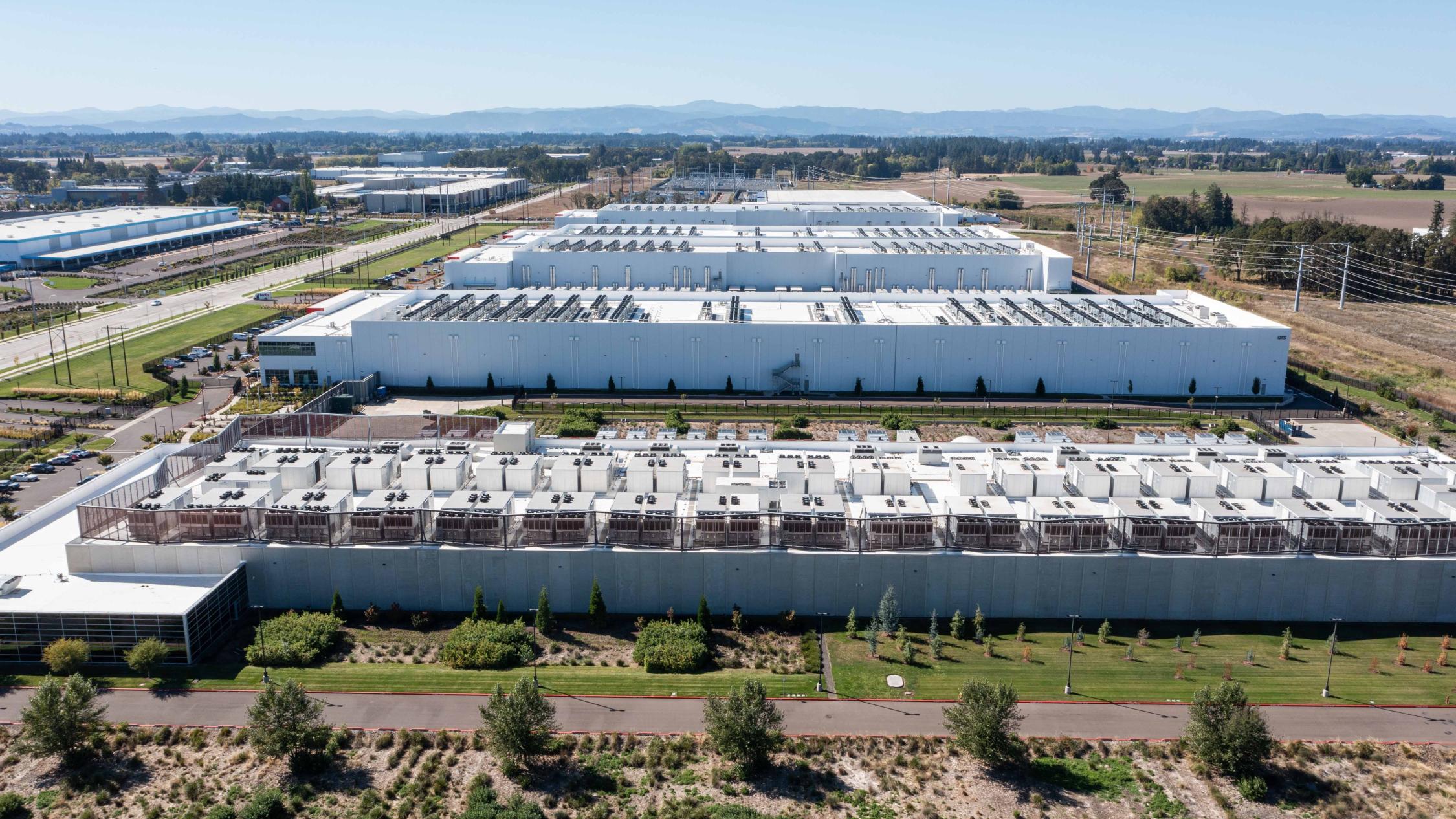
When people picture a data center, they often imagine something remote: a huge warehouse humming quietly far from the city. New research from NYU Tandon School of Engineering shows that assumption is largely wrong.
The study, published in Nature Cities, examined the locations of 4,283 data centers across the contiguous United States and found that 97.5% of them sit inside metropolitan or micropolitan statistical areas, meaning urban cores and their immediate surroundings.
The roughly 2.5% of facilities technically outside city limits are, on average, just 8.5 miles from the nearest urban edge. The cloud lives downtown.
“There is a prevailing narrative of these data centers being somewhere in the middle of nowhere, in rural areas, being a positive force for employment, and being the future of rural communities,” said lead researcher, NYU Tandon Institute Professor Maurizio Porfiri, who is the Director of Tandon’s Center for Urban Science + Progress and of the NYU Urban Institute. “We dramatically challenged this view.”
The concentration is striking even within the urban category. Five metro areas, Washington-Arlington-Alexandria, Chicago, Dallas-Fort Worth, New York-Newark-Jersey City, and Phoenix, account for nearly a third of all U.S. facilities. The Washington region alone hosts 610 data centers, reflecting Northern Virginia’s status as the global capital of data infrastructure (see appendix).
So why cities?
The answer, the researchers found, suggests that a lot has to do with what’s already there and what used to be there.
The single strongest predictor is electricity capacity, meaning how much power local generators can produce. Data centers are power-hungry, running thousands of servers around the clock and drawing enormous, steady loads from the grid.
But a notable finding goes beyond electricity supply. Closed coal plants near cities are becoming magnets for new data center builds. When a plant shuts down, the power lines and grid connections built to carry electricity continuously do not disappear. Data center developers can tap directly into that infrastructure, or, in some cases, redevelop the sites themselves.
The numbers bear this out. Among cities that overlap with areas designated as Energy Communities under a 2022 federal policy, data centers under development are twice as likely to be found there than in cities without that designation (see appendix).
The policy was designed to direct clean-energy investment toward regions hurt by coal plant closures. The research suggests the digital economy may be taking root in many of the same places as the fossil fuel economy it is meant to succeed.
Because data centers draw from their local grid, their carbon footprint depends heavily on how that grid generates power. A typical data center in Montana or North Dakota produces more than 350,000 tons of CO2 emissions annually, while the average facility in Vermont, New Hampshire, or Arkansas produces less than 3,000 tons.
Beyond electricity supply, data centers also cluster where IT workers and high-speed internet are concentrated. Local water shortages seem to have less of an impact on data center placement, despite the facilities consuming enormous amounts of water for cooling.
The opacity of the industry compounds all of these problems.
“As this industry rapidly grows, the limited publicly available data on its footprint creates a real challenge,’ said Ofek Lauber Bonomo, a postdoctoral researcher in Porfiri’s Dynamical Systems lab and a paper co-author. “That makes it more difficult for planners, for local residents, and for anyone trying to make informed decisions about their community’s future.”
“The patterns we found were consistent and clear,” added Anton Rozhkov, a CUSP Industry Assistant Professor and paper co-author. “Where the infrastructure already exists, the data centers follow. The question now is whether that is the future we want to build.”
The Nature Cities paper follows the recent announcement that Porfiri and Camilla Ancona – a paper co-author and postdoctoral researcher in Porfiri’s Dynamical Systems Lab – were named among the 2026 cohort of Microsoft Research Fellows, to advance their work using AI-driven simulations to help utilities and regulators decide where to site data centers before breaking ground.
